Most articles about starting a maritime career are written by training institutes. That matters, because an institute’s job ends the day you pay the fees. Ours starts later – a recruitment and placement company only earns anything when a real shipowner accepts a real candidate and that candidate signs on.
So this is the recruiter’s version. What the industry actually is, what the entry routes actually are in 2026, what the paperwork chain looks like, and where the money quietly disappears for people who get it wrong.
If you want the short answer: yes, it is still one of the few careers where an Indian candidate with a Class 10 certificate can be earning in foreign currency inside two years. And no, it is not the easy money the Instagram ads suggest.
What is The Maritime Industry?
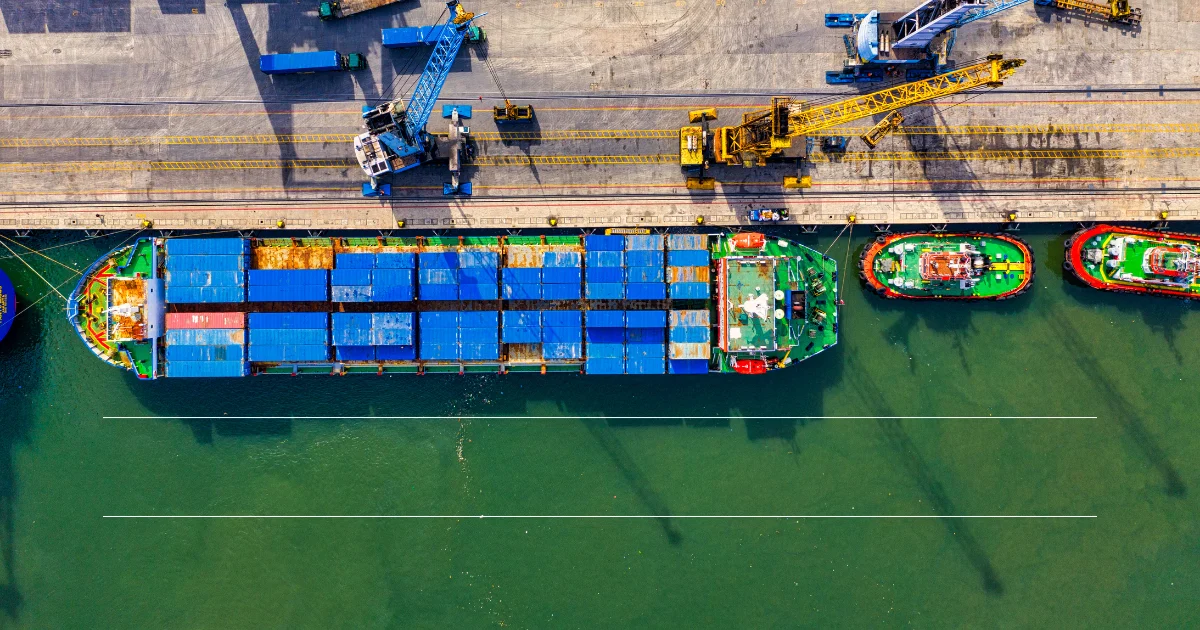
The maritime industry is everything involved in moving goods and people by sea, plus everything that supports it. Roughly 80% of world trade by volume travels by ship. When you unbox a phone, the phone spent weeks in a steel box on a vessel crewed by around twenty people.
It is easiest to understand as four layers:
1. Commercial marine transport
the ships themselves. Container ships, crude and product tankers, LNG and LPG carriers, bulk carriers, car carriers, offshore support vessels, cruise ships. This is where seagoing jobs live.
2. Maritime logistics
The movement chain around the ship. Freight forwarding, port operations, terminal handling, customs clearance, cold chain, warehousing. Shore-based, office-hours, and growing fast in India.
3. Marine transportation services
The specialist support. Ship management, bunkering, marine insurance and P&I, classification societies, surveying, salvage, ship agency, dry docking and repair.
4. Regulation and manning
Flag states, the IMO, and – in India – the Directorate General of Maritime Administration (DGMA), which until June 2026 was the Directorate General of Shipping. Recruitment and placement companies like NeoSea Talent Management sit in this layer, licensed and audited.
Most people use “maritime industry” to mean layer 1. When you plan a career, look at all four. Officers who come ashore after ten years at sea usually land in layers 2 and 3, and they land well.
Maritime jobs examples: what you can actually apply for
A merchant vessel is organised into departments. Entry points differ by department, and so do the qualifications.
- Deck department (navigation and cargo)
- Deck Cadet / Trainee Nautical Officer – the entry rank for officers
- Third Officer, Second Officer, Chief Officer – progressive officer ranks
- Master (Captain) – command
- Able Seaman, Ordinary Seaman, Bosun – the ratings ladder
- Engine department (machinery and propulsion)
- Trainee Marine Engineer / Junior Engineer – the entry rank
- Fourth, Third, Second Engineer – progressive ranks
- Chief Engineer – head of department
- Oiler, Wiper, Fitter, Motorman – ratings
- Electro-technical
- Electro-Technical Officer (ETO) and Electro-Technical Rating (ETR) – automation, control systems, high-voltage equipment. Demand here has grown with vessel automation.
- Catering department
- Cook, Messman, Steward, Chief Cook – a genuine and often overlooked entry route
- Shore-based maritime jobs
- Crewing executive, operations executive, port agent, marine surveyor, ship chandler, freight forwarder, terminal supervisor, marine insurance and claims, HSEQ and vetting coordinator
Two things to take from that list. First, “maritime career” is not one job – it is a ladder in a department, and which department you enter at 20 largely determines the ladder you climb until 45. Second, there is a shore-side industry in India that is hiring people who have never sailed.
Is Marine Transportation A Good Career Path?
What is genuinely good about it
You earn in USD, and for Indian seafarers meeting the residency conditions, seafarer income is treated favourably under Indian tax law – confirm your own position with a qualified tax advisor rather than with an agent. [VERIFY - link to the current NRI-seafarer taxation rule before publishing; do not state the number of days.]
The progression is transparent. Sea time plus a Certificate of Competency equals the next rank. It does not depend on office politics or on who your uncle knows. Very few Indian industries work that way.
Entry is not gated by an expensive degree. The rating and catering routes accept Class 10 candidates. The officer routes accept Class 12 with science.
Leave is real leave. Four months on, two to three months fully off, with no laptop.
What nobody puts in the brochure
You will miss things. Weddings, funerals, your child’s first year. Contracts run for months and ships do not divert for personal reasons. This is the single biggest reason people leave the profession, and it is not something you can prepare for by reading about it.
Connectivity has improved but is not home broadband. Company policy and vessel type determine what you get.
The work is physical and the environment is hot, loud and confined. Engine rooms in the tropics are punishing.
Employment is contract-based. You are not on a monthly salary between contracts. Long waiting periods between ships are normal early in a career, and nobody pays you for them.
Promotion depends on passing DGMA competency examinations, and those examinations fail people. Sea time alone does not make you an officer.
The verdict: it is a very good career for someone who is practically minded, disciplined about paperwork, and genuinely comfortable being away from home for long stretches. It is a poor career for someone chasing quick money. Be honest with yourself on the second point before you spend a rupee on a course.
How To Get into The Maritime Industry From India In 2026
There are only four things that matter, in this order: the right course, at an approved institute, followed by the right documents, followed by a licensed placement.
Step 1 – Choose The Correct Entry Route
DGMA approves a defined list of pre-sea courses. As set out in DGS Order No. 3 of 2026, the approved pre-sea courses are:
| Route | Duration | Typical academic background | Leads to |
|---|
| B.Sc. Nautical Science | 3 years | Class 12 with PCM | Deck officer |
| B.S. Nautical Technology | 4 years | Class 12 with PCM | Deck officer |
| Diploma in Nautical Science (DNS) | 1 year | Class 12 with PCM | Deck cadet |
| Marine Engineering Degree | 4 years | Class 12 with PCM | Marine engineer |
| Graduate Marine Engineering (GME) | 1 year | BE/B.Tech Mechanical or Naval Architecture | Marine engineer |
| Diploma Marine Engineering (DME) | 2 years | Mechanical diploma holders | Marine engineer |
| Alternate Training Scheme (ATS) | 3 years | Class 12 with PCM | Dual deck/engine |
| Electro-Technical Officer (ETO) | 4 months | Diploma or B.Tech in Electrical/Electronics/
E&TC | ETO |
| General Purpose Rating | 6 months | Class 10 | Deck or engine rating |
| Certificate Course in Maritime Catering (CCMC) | 6 months | Class 10 | Catering department |
If a course is not on that list, it is not a pre-sea course, whatever the brochure calls it. “Maritime management diploma”, “shipping and logistics certificate” and similar programmes may be perfectly legitimate qualifications, but they do not put you on a ship.
Cut-off marks, age limits, eyesight standards and English requirements are set by DGMA and revised periodically. Do not take them from a blog – including this one. Check the current criteria on the institute’s DGMA-approved course listing before you pay anything. [VERIFY - insert current published eligibility for DNS, B.Sc. NS, GME, GP Rating and CCMC from dgma.gov.in, then remove this line.]
Step 2 – Verify The Institute, Not Just The Course
An institute is approved for specific courses, not in general. A college approved to run GP Rating is not automatically approved to run DNS. Ask for the DGMA approval number for the exact course you are joining, then check it against the list on dgma.gov.in.
This is the single most expensive mistake in Indian maritime education. Training taken at an unapproved institute does not count, and there is no refund and no appeal.
Step 3 – Build The Document Chain
Nothing in this profession works without paper, and the order matters:
- INDoS number – your unique seafarer identity number in the DGMA database
- Passport – ECNR endorsement is required
- Pre-sea course completion from the approved institute
- STCW basic safety courses – personal survival, fire prevention and firefighting, elementary first aid, personal safety and social responsibility
- Pre-employment medical examination by a DGMA-approved doctor
- CDC (Continuous Discharge Certificate) – your seafarer service record and identity document
- Vessel-specific and flag-specific courses, depending on the ship you join
Keep every original. Keep scans of every original. You will produce these documents dozens of times over a career.
Step 4 – Get Placed, Legally
An Indian seafarer can only be placed on a merchant vessel through a company holding a valid Recruitment and Placement Services Licence (RPSL) issued by DGMA under the Merchant Shipping (Recruitment and Placement of Seafarers) Rules, 2016. Foreign shipowners cannot hire Indian seafarers directly. They must go through a licensed RPSL company.
This is not a formality. Sea time earned through an unlicensed manning agent may not be accepted by DGMA towards your examinations. You can sail a full contract, come home, and find the time does not count.
A 2026 change to be aware of if you are on the engine side
DGMA has restructured preparatory training for Marine Engineer Officer and ETO Certificate of Competency examinations. Under EAC Branch Circular No. 49 of 2026, a one-month offline preparatory course becomes a compulsory prerequisite for MEO Class IV and ETO candidates sitting the examination for the first time on or after 1 January 2027, with approved institutes able to run batches from 1 November 2026. If you are a cadet or a sailing junior engineer planning your CoC, factor this into your timeline now. Confirm the current text of the circular on dgma.gov.in before you plan around it.
What a Maritime Agency Does and What it Must Never Do
A crewing agency and a ship agency are different businesses, and the confusion costs people money. A ship agency or port agency handles a vessel’s affairs in port: berthing, customs, stores, bunkers. A recruitment and placement company – What NeoSea Talent Management is recruits, screens and places crew, and is licensed and audited for it.
Under the RPSL framework and MLC 2006, a licensed recruitment and placement company must:
- Hold a valid, current RPSL number, displayed at its registered office and shown on the contract letter, sea service certificate and other official documents it issues
- Screen and verify your CDC, CoC, passport, INDoS number, STCW certificates and medical fitness
- File monthly returns to DGMA recording every sign-on and sign-off
- Maintain records of every seafarer recruited
- Ensure your employment agreement, wages and repatriation cover are in place
And the part that matters most to you:
A licensed agency is prohibited from charging you a fee or commission for recruitment or placement. This is not a courtesy. It is a licence condition rooted in MLC 2006, and DGMA has suspended licences over money found in company accounts, directors’ accounts, or the accounts of their family members and employees.
There are narrow, legitimate costs – your own medical examination, your own travel documents – and those must be genuine, purposeful and receipted. “Registration fee”, “documentation charge”, “seat booking”, “joining confirmation” and “guarantee amount” are not among them.
Before You Accept Any Offer, Do These Four Checks
- Verify the RPSL number against the DGMA list of valid, invalid and suspended agencies. A number on a letterhead proves nothing until you check it. Confirm it is currently valid, not expired or suspended.
- Read the Seafarer Employment Agreement in full before signing. Rank, vessel name and IMO number, wage, contract duration, and repatriation terms should all be stated. Vague vessel details are a warning sign.
- Never pay into a personal bank account. No legitimate agency will ask.
- Never hand over original documents to an unverified recruiter. Where submission is genuinely required, take a written receipt.
NeoSea Talent Management Pvt Ltd holds RPSL MUM-162374. We publish it on every page because you should be checking it – ours and everyone else’s.
A Realistic Timeline
For a Class 12 science candidate taking the DNS route:
- Months 0-3: IMU CET or institute entrance, admission, sponsorship interviews
- Months 3-15: one-year DNS course
- Months 15-18: STCW modules, medical, CDC, passport, waiting for a vessel
- Month 18 onwards: first contract as deck cadet
For a Class 10 candidate taking the GP Rating route:
- Months 0-2: institute selection, verification, admission
- Months 2-8: six-month residential course
- Months 8-12: documents, medical, placement, first contract as trainee rating
Both timelines assume you clear medicals and that vessel demand is normal. Plan for delay. Anyone promising you a specific joining date before you hold a signed employment agreement is guessing or selling.
Five Mistakes That Cost Indian Candidates The Most
- Paying a “placement fee”. It is prohibited. If you have paid one, you have already been told something about that agency.
- Joining an institute approved for a different course. Check the approval number for your exact course.
- Treating the medical as an afterthought. Colour vision, eyesight and BMI standards end careers before they start. Get screened before you commit fees.
- Sailing through an unlicensed agent. Sea time may not be recognised. Everything after that is delayed.
- Choosing the shortest route rather than the right one. GP Rating gets you to sea faster. An officer route gets you further. Neither is wrong – but choose deliberately, not because a counsellor had a target.
What NeoSea Talent Management Does Not Publish, and Why
We do not publish salary tables on blog posts. Wages for the same rank vary by flag state, by collective bargaining agreement, by vessel type, by company and by the month. Any site quoting you a single confident figure for “merchant navy salary” is either generalising or advertising.
Actual figures appear on our live vacancy postings, tied to a specific rank on a specific vessel, because that is the only place a number means anything.



[…] Cadets and trainees: this count starts with your very first CDC entry. If you haven’t signed o… […]